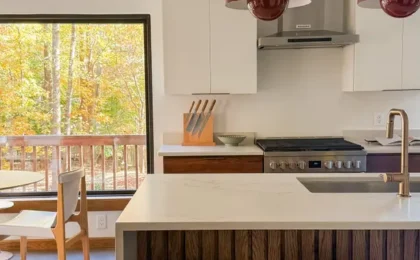
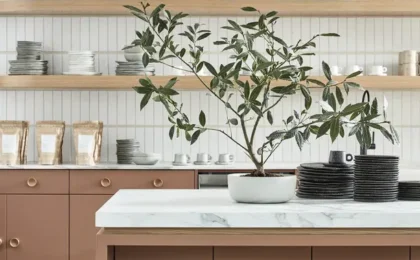
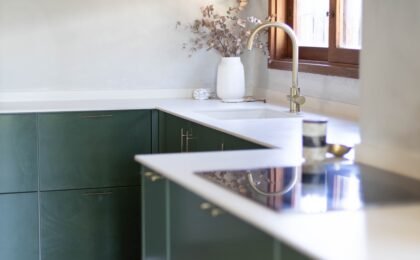
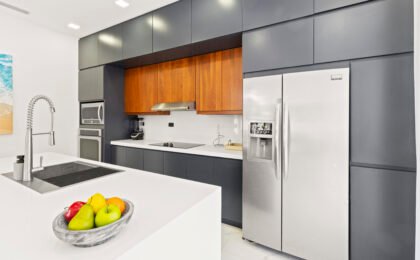
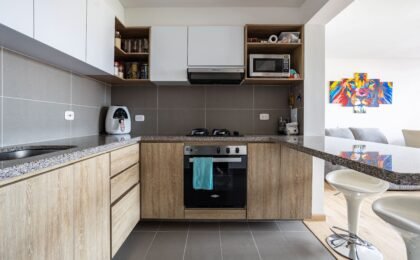
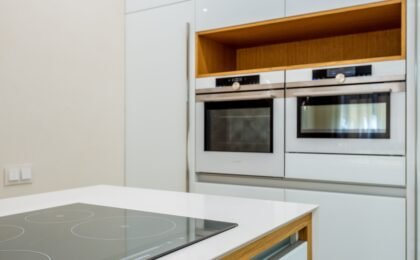
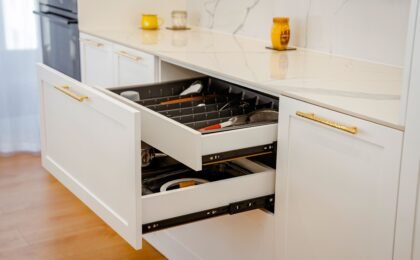
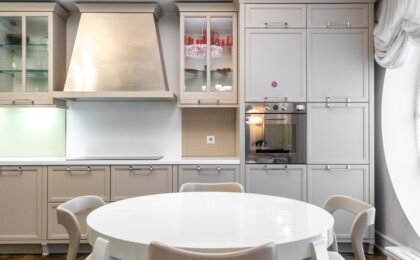
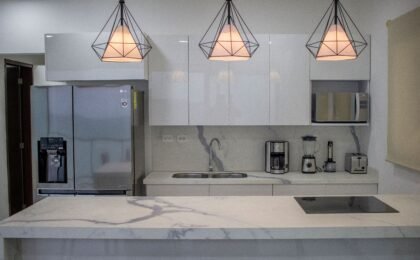
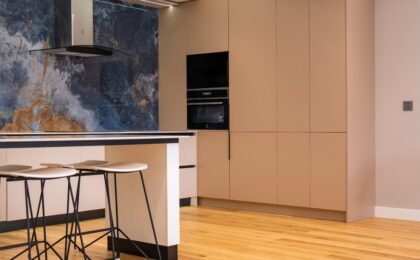
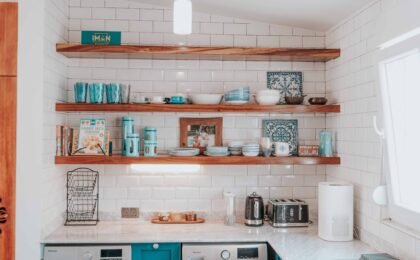
When we delve into the fascinating universe of interior architecture, high-end residential remodeling, and meticulous kitchen design, we tend to concentrate the vast majority of our creative and economic efforts on selecting cutting-edge furniture fronts, millimetric optimization of available square feet, choosing high-performance porcelain or sintered stone countertops, or ergonomic space distribution. However, there is an intangible yet absolutely decisive element—often relegated to the background—that possesses the absolute, transformative power to turn a cold, impersonal space into a warm, welcoming home, or a chaotic room into an environment of maximum productive efficiency: professional technical lighting.
In the contemporary 21st-century home, the kitchen has definitively ceased to be a watertight, secondary, and purely functional room destined exclusively for handling and cooking food. It has risen with its own strength to become the true neuralgic, social, and emotional center of the home: a multipurpose meeting place where families have breakfast, work on laptops, receive informal visitors, and share daily life. For this reason, projecting efficient, sophisticated, and healthy lighting requires completely abandoning the obsolete schemes of a single central ceiling light point—which systematically generates annoying body shadows over the work surface itself—and embracing an advanced professional strategy based strictly on layered lighting.
How are ambient light, task light, and accent light masterfully integrated to achieve a perfect balance between visual ergonomics, absolute safety against domestic accidents, and aesthetic sophistication in kitchen design? We break down below the nine essential technical keys to mastering light in the true heart of your home.
1. The fundamental concept of layered lighting: Beyond a simple commercial bulb
The technical and architectural premise underlying the principle of layered lighting consists of intelligently and coordinately superposing different lighting sources with specific purposes, millimetrically calibrated color temperatures, and adjustable intensities using dimmable systems. This strategic superposition makes it possible to instantly adapt the kitchen’s atmosphere to each moment of the day and each specific use: from the maximum technical clarity and lighting neutrality required to cook with total precision and safety during morning hours, to a dim, warm, intimate, and enveloping environment designed specifically for a leisurely after-dinner chat or a relaxed dinner.
- Functional synergy and visual wellness: The harmonious and dosed combination of general, functional, and decorative lighting roots out abrupt contrasts between high-luminosity areas and corners in shadow, drastically reducing accumulated visual fatigue after long days and improving the psychological comfort of those who inhabit the room.
2. Layer 1: Ambient or general light (The base luminous canvas of the room)
Ambient lighting constitutes the first fundamental layer of the project and acts as the general plan that uniformly and comfortably replaces natural light when it begins to fade at dusk. Its main objective is not to illuminate specific tasks or handle food, but to guarantee a supremely safe, comfortable, and homogeneous transit visibility throughout the perimeter of the room.
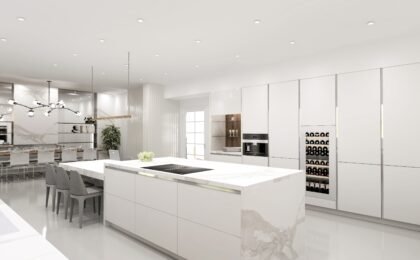
- Wide-angle recessed fixtures and downlights: They are strategically distributed across the entire perimeter of the false ceiling to bathe the room in diffuse clarity. It is a fundamental technical requirement to select luminaires with an opening angle greater than 120 degrees to avoid creating excessively concentrated points of light that produce direct glare.
- Recommended color temperature: For general kitchen lighting, experts advise a warm neutral tone (usually around 3000K), which provides an extraordinarily clean, modern, and cozy visual sensation without artificially altering the real perception of furniture or food colors.
3. Layer 2: Task or functional light (Ergonomics, precision, and safety in the work zone)
If ambient light acts as the architectural background, task or functional light is the indisputable ergonomic protagonist within kitchen design. It is exclusively intended to directly and intensely bathe those horizontal and vertical surfaces where cutting elements, hot foods, liquids, or small appliances are handled, guaranteeing millimetric visual precision and preventing any type of domestic accident.
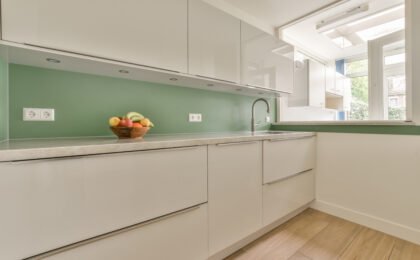
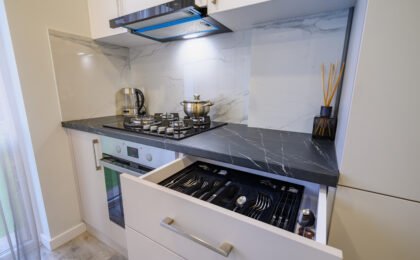
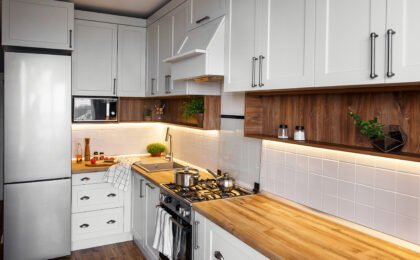
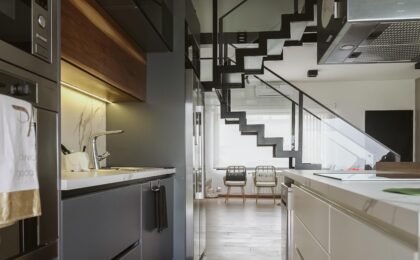
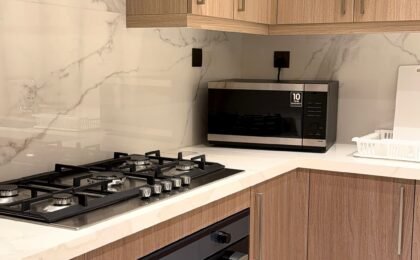
- Linear lighting under high modules: The installation of aluminum profiles with recessed or surface LED strips under upper cabinets is an absolutely indispensable technical resource. These systems project a continuous, homogeneous light beam completely free of shadows right over the preparation and cutting countertop.
- Specific spotlights over cooking and water zones: The critical washing area (sink) and cooking zone (induction or gas cooktop) require dedicated high-power luminaires, frequently integrated with elegance into the extractor hood structures themselves or via adjustable spotlights with a high color rendering index ($CRI > 90$).
4. Layer 3: Accent and decorative light (Visual sculpture and advanced aesthetic sophistication)
The third major lighting layer possesses an eminently aesthetic, scenographic, and architectural character. Its main function is not to provide practical visibility, but to enhance constructive textures, delimit complex volumes, highlight select tableware pieces behind glass display cabinets, or provide a touch of avant-garde design that exponentially elevates the visual category of the ensemble.
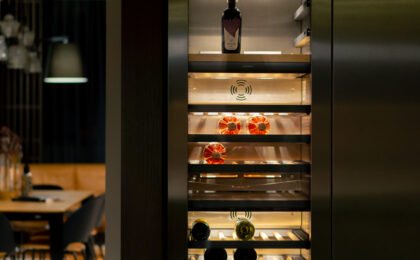
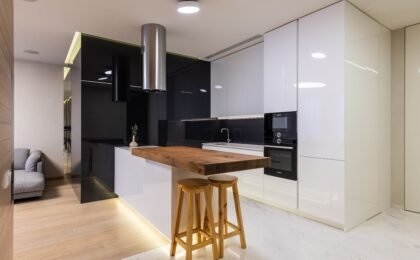
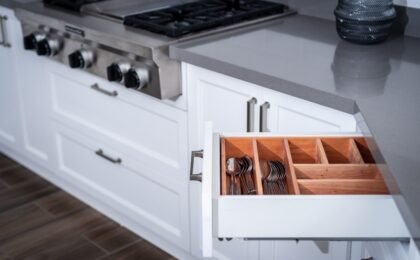
- LED strips in toe kicks and drawer interiors: Placing hidden indirect lighting in the lower plinth of the furniture generates a sophisticated visual effect of a “floating piece of furniture” that grants great aesthetic lightness to large-volume blocks. Similarly, automating the switching on of LED lights via sensors when opening deep pot-and-pan drawers provides unmatched premium functionality.
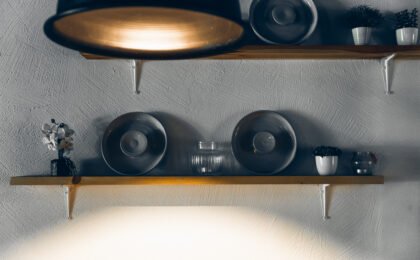
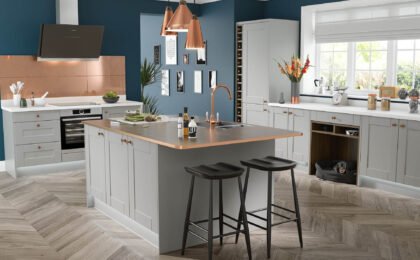
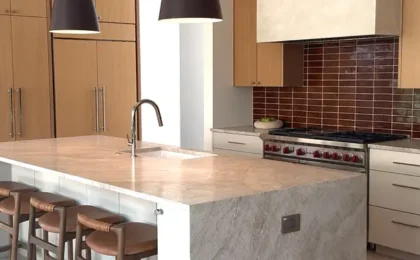
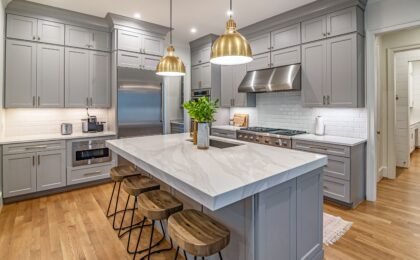
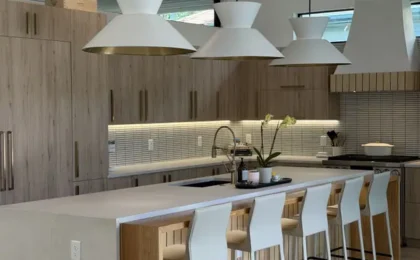
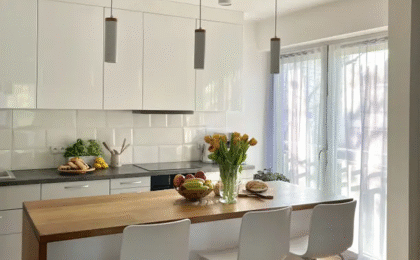
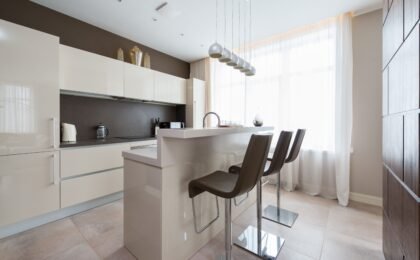
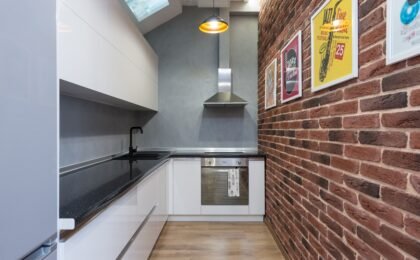
- Pendant lamps over islands or bars: Suspended luminaires over the breakfast bar or central island act as authentic sculptures of light, elegantly delimiting the social zone and providing a strong decorative personality that defines the home’s style.
5. Color Rendering Index ($CRI$): Real and natural food fidelity
A technical aspect of vital importance and frequently lamentably forgotten in kitchen lighting is the Color Rendering Index ($CRI$ or $Ra$). In a domestic space where we deeply value the natural freshness of ingredients, the exact color of meat, or the optimal ripeness of fruit, artificial light must be perfectly faithful to visual reality.
- Superior technical requirement: It is a non-negotiable requirement to choose LED light sources that guarantee a $CRI \geq 90$ (or preferably higher). Deficient lighting with low color rendering pales fresh food, distorts the noble wood or lacquer finishes of furniture, and transmits an artificial, cold, and unpleasant atmosphere.
6. Intensity regulation (Dimming): Scenographic versatility and adaptive comfort
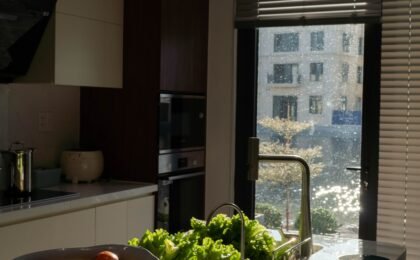
The 21st-century multifunctional kitchen demands absolute dynamism. The same architectural surface that bustles with intense activity during early morning hours with white, powerful light can and must transform at night into an intimate, calm, and deeply conversational space.
- Smart dimmable systems: Integrating drivers compatible with advanced intensity regulation technologies (DALI, 0-10V systems, or wireless home automation protocols) allows independent modulation of the luminous flux of each lighting layer, creating preconfigured “scenes” for cooking with maximum visibility, eating with family, or relaxing as day turns to night.
7. Early and millimetric planning of electrical installations
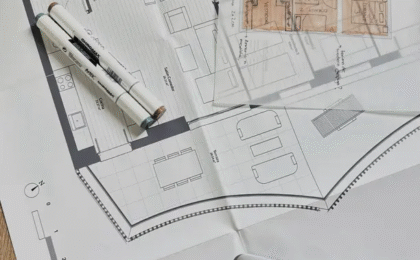
True technical mastery in kitchen design lies in ensuring that no installation, wiring, or device remains visible to the user. Electrical runs, power supplies (drivers), transformers, and register points must be planned with millimetric precision on technical drawings before starting any civil work or furniture assembly.
- Concealment and maintenance accessibility: Transformers for LED strips located under upper cabinets must be placed in technically accessible areas but absolutely hidden from view (such as inside extractor hoods, removable false ceilings, or dedicated upper modules), guaranteeing electrical safety and facilitating hypothetical future maintenance without damaging the furniture.
8. Extreme energy efficiency and long-term lighting sustainability
Opting for advanced layered technical lighting is by no means at odds with responsible consumption; in fact, it constitutes one of the best long-term economic investments in terms of energy efficiency and environmental respect.
- High luminous efficacy LED technology: Within the framework of an advanced kitchen design, betting on high luminous efficacy LED technology not only optimizes visual comfort but represents a key investment in sustainability: the exclusive use of latest-generation LED modules reduces electrical consumption derived from lighting by up to 85% compared to old traditional incandescent or halogen sources, while emitting a minimal amount of residual heat toward stored food in the vicinity.
9. Absolute harmony with furniture finishes and reflective surfaces
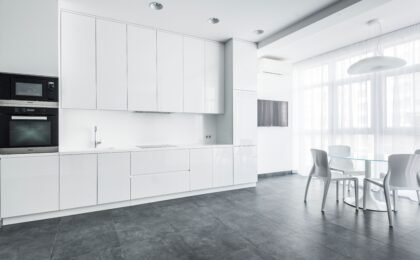
The physical and aesthetic behavior of light inside the kitchen intimately depends on the materials selected for the furniture and perimeter clenching. High-gloss or pure white lacquered surfaces multiply light beams through direct reflection, while ultra-matte absorbent surfaces require a higher density of light points to avoid sensations of gloominess.
- Visual balance and glare control: Planning lighting taking into account the reflectance of porcelain countertops, natural wood fronts, or metal faucets guarantees a perfectly balanced, elegant, safe space free of annoying glares.
At Muebles El Valle, we analyze each exclusive kitchen design project integrating meticulous, fully personalized layered lighting engineering. We illuminate the details that truly matter to create safe, highly functional spaces of dazzling aesthetic beauty that will redefine your home experience.
0