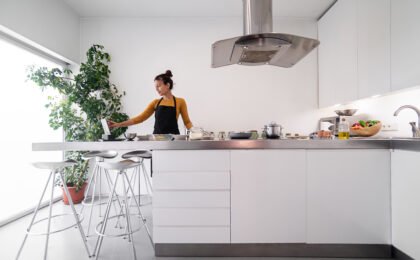
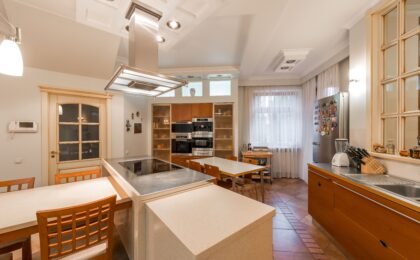
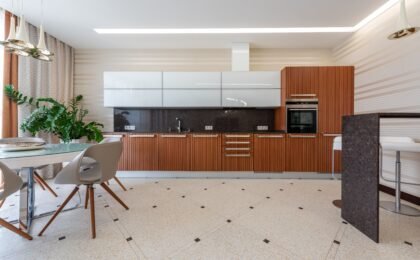
Open-plan spaces and kitchens integrated into the living room have become the undisputed standard of modern interior architecture. Knocking down partitions brings luminosity, a sense of spaciousness, and exceptional fluidity to everyday life. However, when unifying environments, we face an invisible yet extremely annoying enemy: noise.
Appliances in operation, powerful cooker hoods, the clatter of tableware, and the echo amplified by large continuous surfaces can transform a modern, cozy home into a loud and stressful space. To solve this problem from the root, it is essential to integrate insulation and acoustic comfort strategies from the initial phases of any kitchen design project.
Why do noise and echo problems occur in open-plan kitchens?
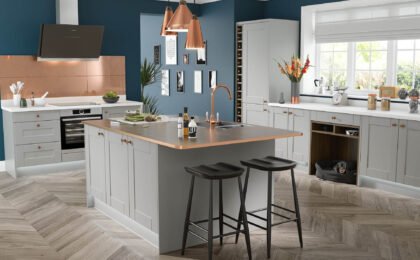
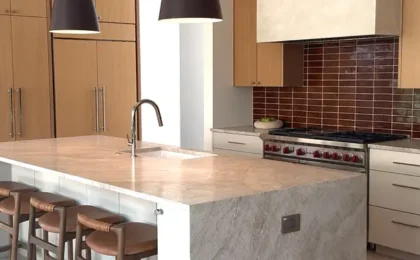
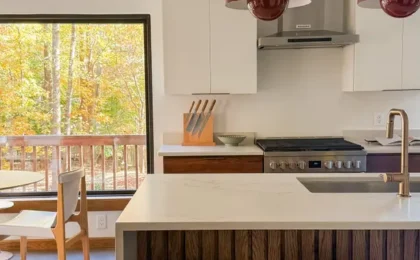
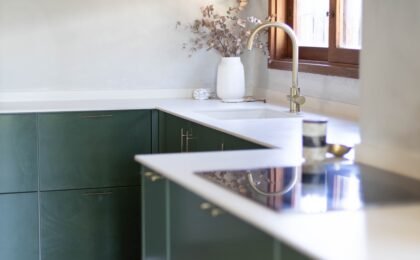
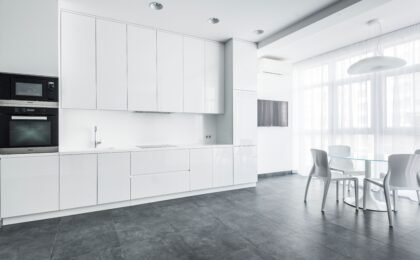
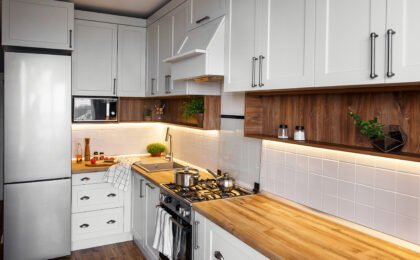
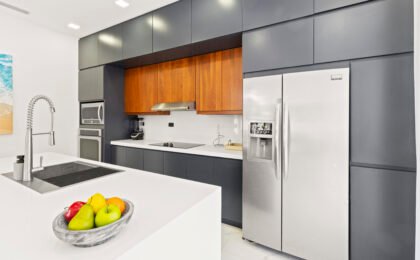
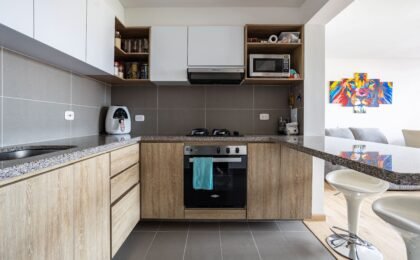
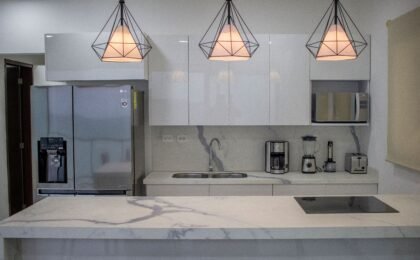
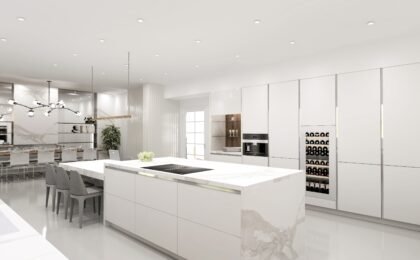
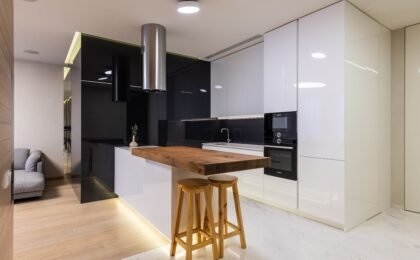
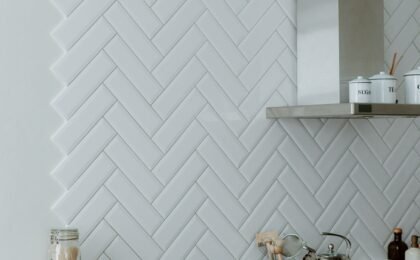
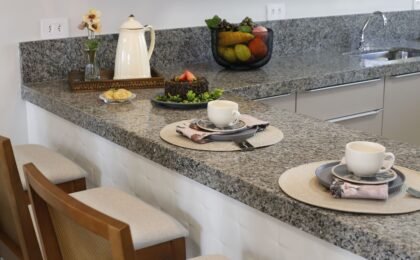
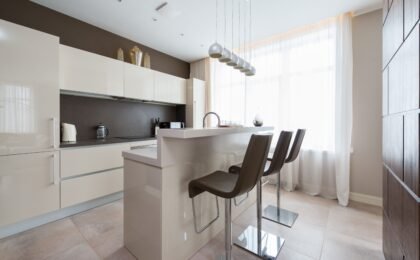
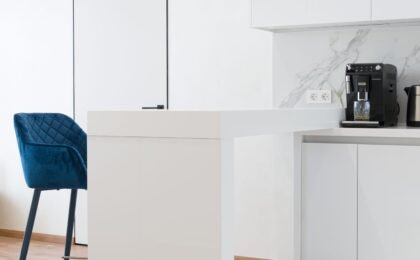
To understand how to solve the problem, we must first understand its origin. Modern kitchens prioritize clean lines, minimalist materials, and highly hygienic, easy-to-clean surfaces: natural stone or porcelain countertops, continuous porcelain or micro-cement flooring, lacquered cabinet fronts, and smooth painted walls or large-format tiles.
The major drawback of all these elements is that they are hard and highly reflective surfaces. Unlike textiles, rugs, or porous wood, rigid materials bounce sound waves instead of absorbing them. This physical phenomenon generates reverberation and echo, causing the sound of water falling into the sink, the refrigerator motor, or clashing cutlery to amplify and travel unhindered straight into the living room relaxation area.
Kitchen design keys and solutions to improve acoustics
Optimizing acoustics does not mean giving up modern aesthetics or overcrowding the space. It is about making smart decisions regarding furniture, materials, and layout within the kitchen design plan.
1. Strategic selection of absorbing materials
Balance is the key to a good project. It is not about eliminating modern surfaces, but about balancing them with solutions that trap sound:
- Continuous flooring with insulation: If you want to unify the living room and kitchen flooring with porcelain tiles, make sure to use acoustic underlays or specific sub-bases beneath the material to reduce impact noise. Another excellent alternative is high-end vinyl flooring, which naturally offers a much quieter step and absorbs vibrations better.
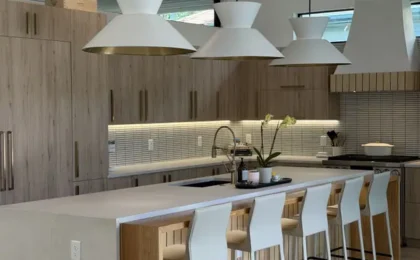
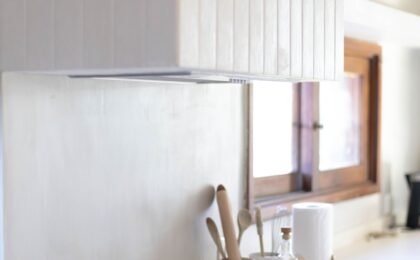
- Sound-absorbing decorative panels: One of the major trends in current kitchen design is the use of grooved wood slat panels over a textile or felt backing. Placed strategically on an accent wall or on the front of an island, they break up sound waves and provide striking architectural elegance.
22. Smart furniture with silent closure systems
The accidental slam of a drawer or cabinet door is one of the most annoying noises during peak household hours. When configuring furniture, you should demand high-quality technical specifications:
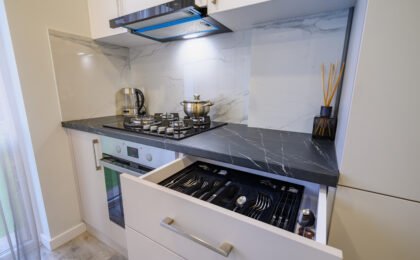
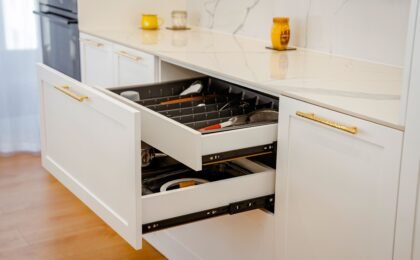
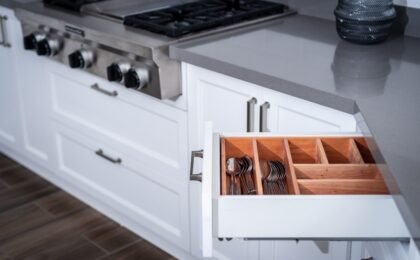
- Hardware with integrated cushioning: Hinges and full-extraction drawer slides with a soft-close system ensure that doors and drawers close smoothly and completely silently, eliminating hard impacts.
- Non-slip and cushioning mats: Placing rubber or felt protectors at the bottom of drawers where tableware, pans, and cutlery are stored completely neutralizes the annoying metallic clinking every time we open and close them.
3. Silent and certified appliances (Low decibels)
In an open-plan concept, an appliance’s power is no longer the only determining factor; the acoustic emission level, measured in decibels (dB), is vital for coexistence.
- Ultra-quiet dishwashers and refrigerators: Prioritize models with advanced inverter motors that emit below 40–42 dB. This will allow you to run the dishwasher at night or maintain a peaceful conversation on the sofa while the appliance is running just a few feet away.
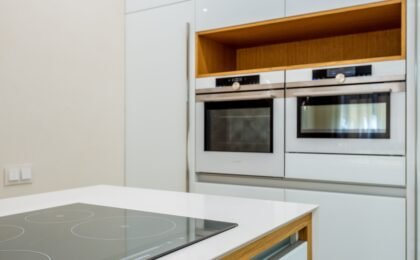
- Next-generation cooker hoods: Historically, the hood has been the biggest source of noise in the kitchen. Today, a good kitchen design incorporates ceiling hoods or integrated countertop hoods with separate brushless motors and optimized extraction ducts that drastically reduce aerodynamic hum without losing suction power.
4. Spatial transitions and textile elements
Although the kitchen is a humid work area exposed to spills, the boundaries with the living room allow you to play with soft elements that act as true acoustic barriers:
- Vinyl or easy-to-clean rugs: Placing a washable rug in front of the sink or cooking area not only protects the floor but immediately dampens sound bounce.
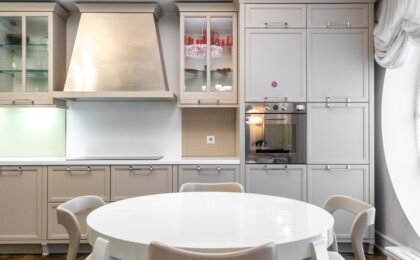
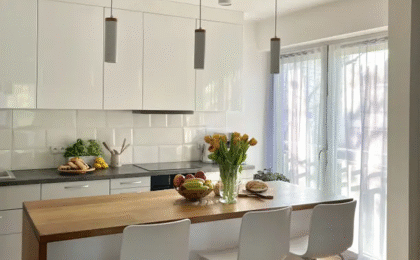
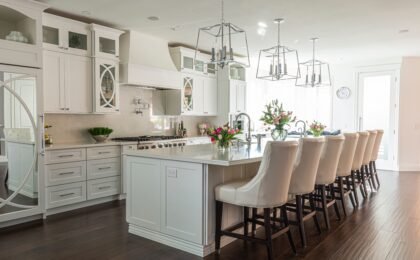
- Window treatments and upholstery: If your open kitchen features large windows, replace metal blinds or rigid canvas shades with denser or double-fabric curtains. Likewise, choosing upholstered dining chairs instead of completely metallic or hard plastic stools will significantly reduce ambient noise when the family gathers to eat.
Acoustic comfort and well-being at home
A successful kitchen design project goes far beyond achieving magazine-worthy aesthetics or maximizing storage space. Planning the acoustics from the first sketches ensures that your home maintains an atmosphere of peace, balance, and tranquility, allowing the open kitchen to fulfill its true purpose: being the living heart of the home without becoming a constant source of noise and discomfort.
At Muebles El Valle, we are passionate about bringing the kitchen you have always dreamed of to life. We help you take care of every technical and aesthetic detail—from space insulation to the choice of finishes—so you can enjoy a warm, extremely quiet environment fully tailored to your lifestyle.
0